
Live free yoga

Liberated living through the sadhana of yog; enlivened realisations by the grace of the Guru.


Leave a comment

Gurudakshina a ऋण भङ्गुर – breaking of debt.

Having written so much about the Guru-Shishya Parampara, it was but natural that I arrived at this topic by and by. I have touched upon this topic in my book One Master one disciple – peeling of an onion, but new realisations and gnosis dawn upon any serious practitioner as the neuron in the brain light up during meditation as it did for me. This phrase ऋण भङ्गुर came to me while in meditation and was an ah ha moment as new light shone upon an old subject.

This is a short post on a much maligned and over explained tradition of gurudakshina, an offering expected of a shishya when receiving diksha into a particular sadhana from a teacher. The incident that always comes to my mind when a gurudakshina is mentioned is the example of Ekalavya and Dronacharya. The morality of the incident, the motives behind the demand by Dronacharya, can and have been endlessly debated and is not the purview of this post. I mention this here to lay out the ancient act of repaying the Guru for teachings imparted. An act that continues to exist till today, interpreted in various ways to suit various needs.

As always the topic in my posts are drawn from my own inner churning and meant to provoke thought, they are not meant for debate or arguments. On the spiritual path one has one’s own realisations and they hold true for one and that’s how it should be. Each person responsible or their own actions arising from their realisation.


Gurudakshina in the 21st Century

In today’s context, teachers and gurus, mostly of yoga and spiritual techniques have bent over backwards to explain this tradition of gurudakshina. Many do this to gloss over the excessive and exorbitant fee charged by them. The idea seems to be the higher your fee the more your stature as a guru, for you see you can never repay the guru for the teachings imparted so it doesn’t matter how much you pay, it’s never enough.

Added to the fee may be the material desires of the teacher, to own an expensive car, a house, land, travel and so on passed on to the student in the fee. So the fee charged is not just for the teaching but includes baser needs of the teacher that have to be satisfied. Yog that was meant as a sacred learning to be imparted in an atmosphere of sanctity, sans greed, has today become means of livelihood for many and with that has come the dichotomy of fitting this sacred practice into a mercenary mould.

The plethora of spiritual teachers today have given rise to a plethora of explanations about this topic, some genuine, some mere excuses, many a repetitive litany.

A paradox like no other

After having said all this about the current pattern of charging of fee by teachers of new age spirituality, I will be amiss if I don’t mention a contrary point.

It stands to reason that if the end goal of self-realisation is achieved by the disciple by diligently adhering to the principles laid out by their guru; they can never repay the guru for this service. My own sentiments for my Guru is surely impacted by this understanding. No matter the human qualities of the guru, your progress on the path will determine your obligation to the Guru. This assessment by nature is very personal and self imposed, it cannot be determined by another. Yes, it’s a paradox and involves what is called the vivek buddhi inherent in every learner, it may be dormant but will emerge with sadhana, sometimes of many lives.

Personal Turmoil

As a teacher for over 26 years, first within an organisation and now on an individual capacity I had struggled much with the morality of the asking in this offering. A fixed fee that kept rising steeply over the years, often beyond the reach of ordinary folks. The question that greatly bothered me was, is the practice only for the affluent? What about the sincere seekers with paltry means? I had in my own level always accommodated everyone who was sincerely seeking to learn. From the beginning I had always felt the dakshina was more in the purview of the taught rather than the teacher. It’s the student who decides what the lessons are worth to them, rather than the teacher putting a value on their wisdom, for true wisdom flows for all without bias.

But so greatly ingrained is the topic that it took a while to break free of it and the penultimate realisation came with the two words ऋण भङ्गुर II

ऋण भङ्गुर – a liberation

They were two simple words but they illumined my being with, for me, the understanding of this ancient practice. The realisation that the dakshina liberates both the guru and the shishya from obligation to one another in the grosser level. Once this gross cord is cut all that remains is the cord of love that binds the Guru and the shishya in an eternal dance towards the ultimate liberation, when the guru liberates the shishya even from this fixed orbit to chart their own course free of the gurus influence.

Now when I share the practice with new seekers I allow them to decide the dakshina they want to give. With no attachment to the amount given, I am twice liberated.

Leave a comment

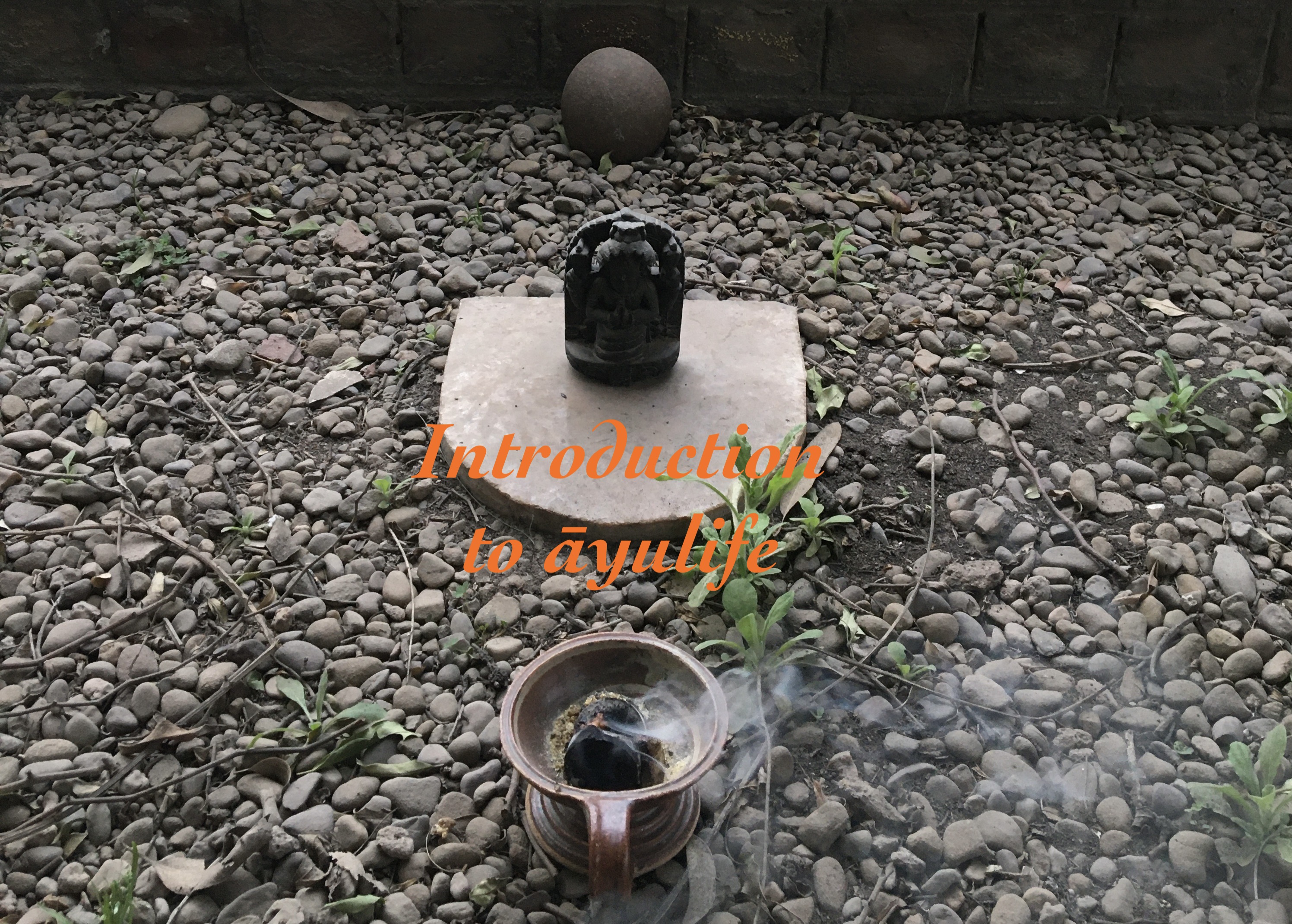
āyulife channel- a nascent step

After a few months of hiatus, I recently started a process very close to my heart, sharing some simple yogic practices arising out of my sadhana on an open platform. Along with the written word on my blogs and book, I have now included the spoken via my YouTube channel- ayulife.


www.youtube.com/ayulife

Yog is a very private and personal journey, in my understanding. Even though thousands may receive the same set of practice, may practice the same Asans, Pranayam and methods of Dharana, it flowers in each of us uniquely because we are each unique and one of a kind. Even though the final result may be the same of Self-Realisation, the path will vary dictated by our individual nature and set of karma.

ayulife is a sincere and joyful attempt at expressing my deep felt and realised understanding of yog, which is one of the six systems- the shad-darshana of Vedic Sanatan way of realisations. System is a very limiting way of describing what is really ‘seeing’ with an inner eye, in-depth and without filters.
The six are each in themselves a vast insight into the philosophy on which is based the present day Hindu “religion’ itself a limiting term for this ocean of enlightened text. I am just giving a brief by line here which according to me is a very inadequate explanation of such profound subjects, but just a taste of the brilliance of the Indic intellect and its range and what it has offered to those like us on the path to savour and explore and discard. All 6, with many sections and sub sections overlap each other and influence the practitioners of one or the other.
.
The shad- darshanas and their originator.
1. Nyaya Darshana- the path of logic and reasoning, removing of ignorance brings an end to suffering, right knowledge brings liberation to the human soul. Rishi Gautama
2. Vaisheshika Darshana- metaphysics, the study of atom (anu), of materials from gross to subtle, of their similarities and differences, of those that exist and the lack of existence, the eternal and non-eternal and Karma- action and reaction, creation and dissolution, to name a few. Rishi Kannada Kashyapa
3. Yog Darshana- the path of uniting the individual spirit to the universal spirit via the 8 limbs of yam, niyam, asan, pranayam, pratyahar, dharana, dhayn and samadhi. Rishi Patanjali
4. Samkhya Darshana- a non-theistic path of dualism, there’s no room for Isvara or God here. The study of Purusha and Prakriti- the moving and unmoving principles, of evolution from material and external pleasures to pure consciousness. Rishi Kapila and IsvaraKrishna
5. Purva-Mimamsa Darshana (Karma Kanda)- Establishes the authority of the Vedas, the magical power of mantras and yagnyas, potency of rituals, the existence of a soul, duties and obligations, embodying the philosophy of Karma Yoga and requirement to move through the 4 varna ashram of brahmacharya, grihasta, vanaprastha and Sanyasa. Rishi Jamini
6. Vedanta Darshana ( Uttara Mimamsa)- Focussing on the Upanishads, emphasising the importance of a Guru, rather than the ritualistic components. Vedanta actually means the end or the conclusion of the vedas. It’s like a synopsis of the 4 vedas Rig, Yajur, Sama and Athrva, taking the nectar from these. It includes the concept of dvait (dualism), advaita (non dualism). Rishi Badarayana

One must remember that the Indic Sanatan philosophy has a strong base of accepting and refuting deep rooted systems and this right is extended to every student of these systems.

I was introduced to these concepts as a child just by being born into a family in which these topics were the norm at home. Discussions and debates amongst my elders revolved around these topics. At a very early age I had started discarding many of these “truths” and was clearly gravitating to the path of Yog, which I find very liberating in its simplicity. I met my Guru Yogiraj Siddhanath from the lineage of Kriya Yoga of Mahavatar Babaji in 1998, first in a vision and then in person. I was under his tutelage and taught the evolutionary practice of Kriya Yoga for 23 years. I have recollection of my years with Lahiri Mahasaya, when I was first initiated into this practice. I am sharing this here because education continues from lifetime to lifetime and expresses and fructifies in this life as per the efforts put in lives past.

You will find many of the concepts from the other darshanas that have influenced me not by reading but directly through realisations, in my writing as well as on my channel.

In ayulife it will be my sincere effort to share those techniques that have helped me over the decades to come to a state of clarity, equilibrium and equipoise and hope it helps others too. The nature of the open platform being such, I am bound to exercise some discretion on the content, for more advanced practice I will be launching an online platform soon. Once again I share the link here. Do subscribe and I thank you all in advance for your support.

www.YouTube.com/ayulife