Live free yoga

Liberated living through the sadhana of yog; enlivened realisations by the grace of the Guru.


Leave a comment

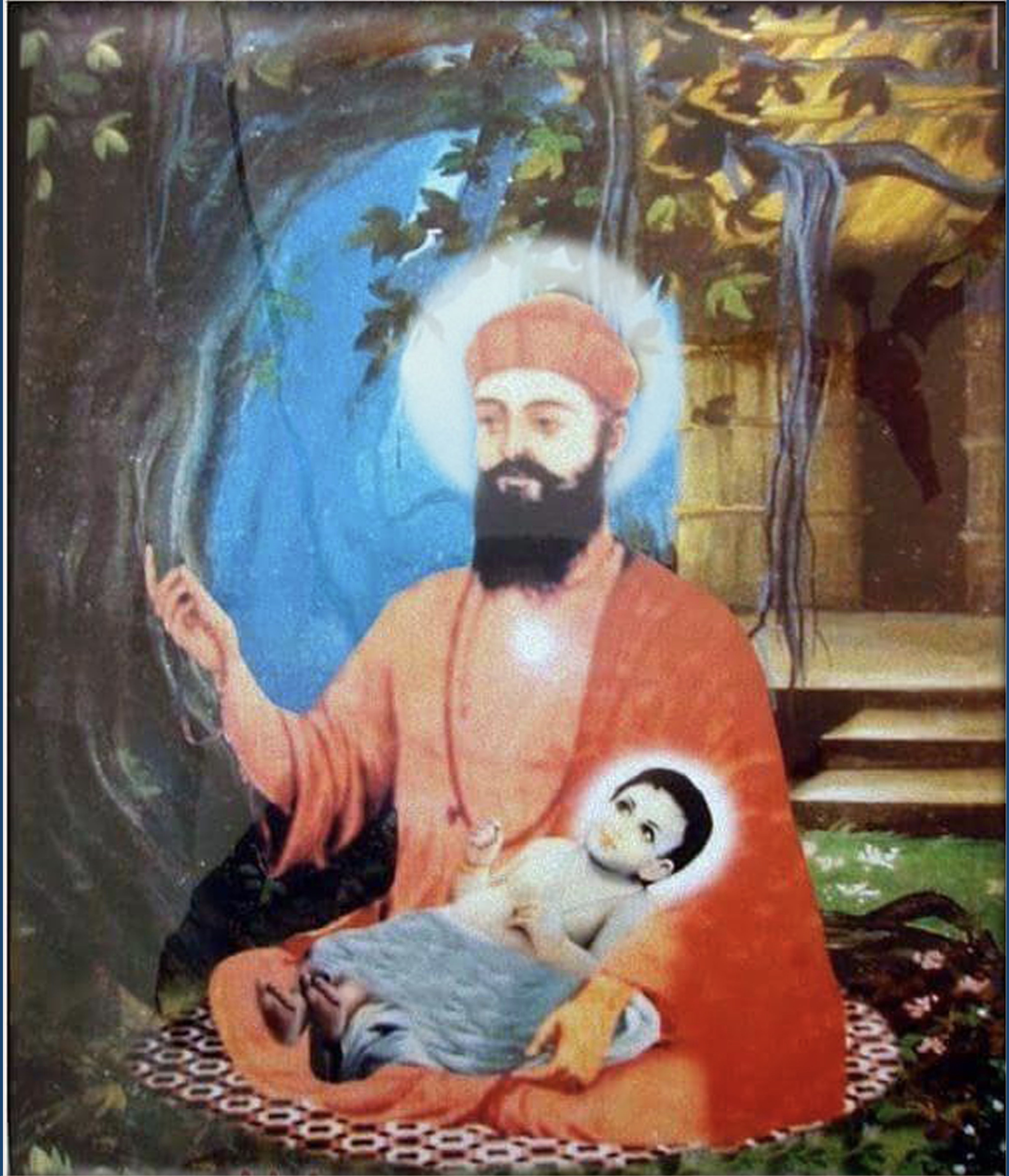
Baba Siri Chand – Yogi, Guru of Gurus and son of Guru Nanak

This article was commissioned by and published online. Posting here as is.
https://www.esamskriti.com/e/Spirituality/Philosophy/Baba-Siri-Chand-~-Yogi,-Guru-Of-Gurus-And-Son-Of-Guru-Nanak-1.aspx

Baba Siri Chand- Yogi, Guru of Gurus, son of Guru Nanak

This is a topic of much trepidation. Though I feel humbled and inadequate to broach this topic, I write purely out of my love and reverence for this great Yogi and mean no disrespect to any other beliefs that may be held by others. 

As usual my interpretation is based on personal experiences and I look for no validation. My intention is neither to offend nor refute, nor to please anyone. Enjoy this writing as a heartfelt tribute to the glorious being called Baba Siri Chand, son of Guru Nanak Devji and Mata Sulakhani (or Sulakshana Devi). 

A Personal Note

My association in this life with Baba Sri Chand started as a remembrance of a flavour, a fragrance, a remnant from the past that flowed and could be savoured in the present. A difficult morsel to chew for many, but the fact remains that in the Indic thought of birth and rebirth, it firmly understands that the soul is reincarnated in every life to complete past life karmas.

It was early morning on a full moon day in April 2002. I got up in the wee hours and went to my newly constructed temple studio to meditate. The full moon was shining through the large window looking almost as if I could reach out and touch it. As I went in and out of my deep sadhana my eyes opened and lo I saw this face forming in the moon and emerging out of it. 

Though not associated in any way with the Udasis in this life, I immediately identified the vision as that of Baba Siri Chand, a figure of no immediate connection at that time. Smiling gently he silently communicated that I should visit his akhara that day itself……I had a lot of appointments planned for that day so I asked if I could come next day? At this, he smiled gently and disappeared back into the moon. 

Of course, I dropped everything and after making enquiries, made my way to Kiratpur, the only place connected with Baba Siri Chand that I could find out about at that point of time. Later I got to know that the sacred ground breaking ceremony for this city was done by Baba Siri Chand and the Gurudwara I visited was established by Baba Guruditta, son of Guru Hargobind Ji (1595-1644)
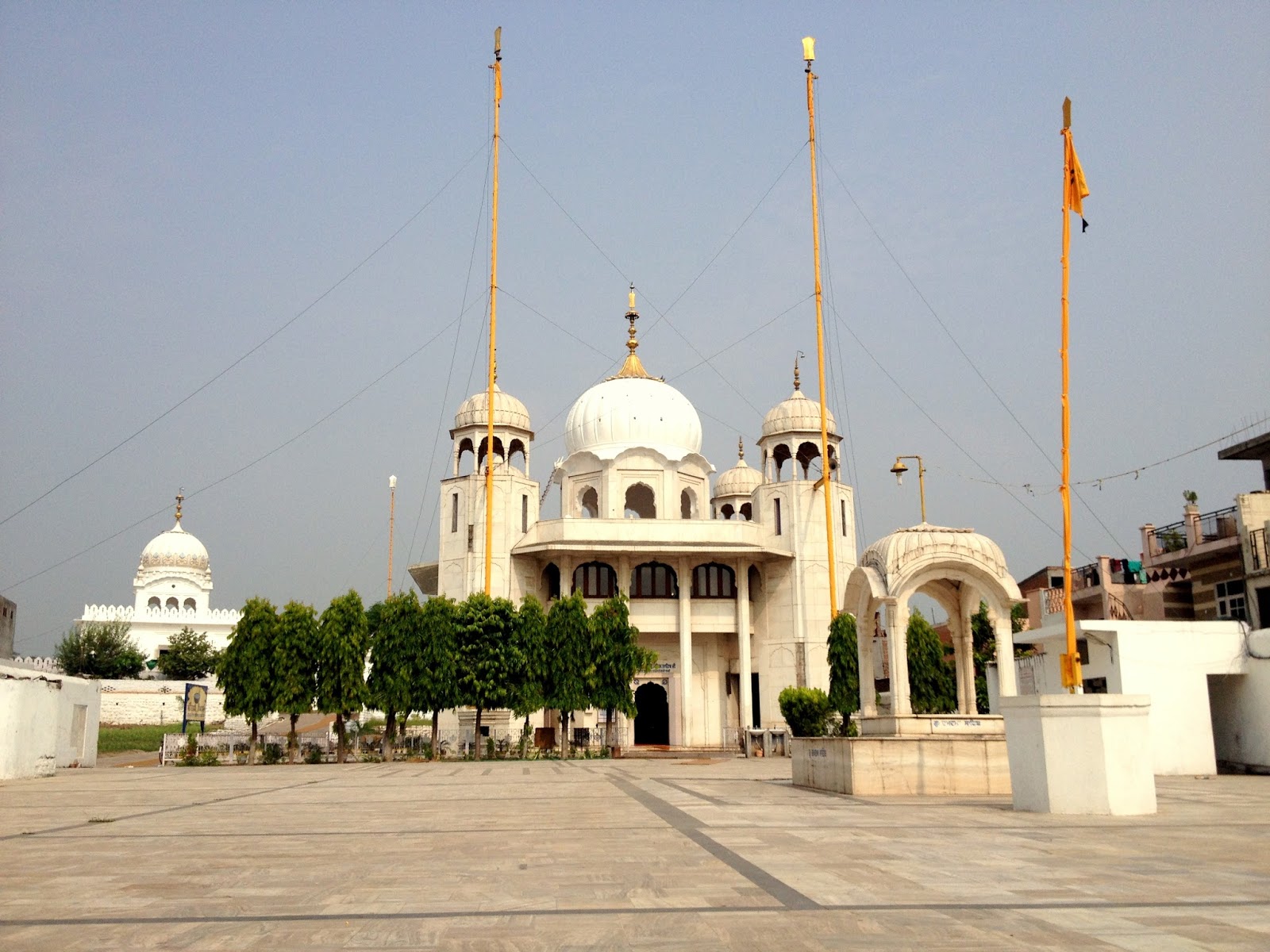


Kiratpur Sheesh Mahal Gurudwara

It was with a wonderful sense of homecoming that I entered the very simple premises of this sacred place. Unlike most Gurudwaras I had visited, this one was very unostentatious and basic. At that time I did not know the significance of this Gurudwara called Gurudwara Sheesh Mahal. 

While being summoned by Baba Siri Chand appearing in the full moon, he had asked me to bring, as an offering, a shawl I had bought for my Guru Yogiraj Siddhanath whom I was to meet later in the month at his ashram near Pune, Maharashtra. So I had carried it with me and very reverentially offered it at the darbar sahib and the kind Sikh Udasi there helped me to unfold and lay it on the platform besides the granth. I then went and sat at the Dhuni for a while before heading back to Chandigarh. 

This first contact led to a realisation later of past interactions with this evolved being from the time of the sixth Guru, Guru Hargobind Ji also known as Sachhe Patshah, and which mystically led me to discover a gurudwara in Sector 39, Chandigarh ie dedicated to and associated with Baba Siri Chand; and which was also, as was revealed to me, used as an army camp by Guru Hargobind, instrumental in preparing soldiers for the coming resistance to the then ruling Mughals.

Baba Siri Chand 1494-

Early Life


Siri Chand was born in the year 1494, his birthday is recorded as the 8th of September. 

It is believed by his devotees that Mata Sulakhani had a vision of Mahadev Shiva while carrying Siri Chand in the womb. Also remembered is the recounting of Nanak’s meeting and debate with the Siddhas in the Siddha Goshti. Here he is said to have defeated Guru Gorakhnath who then told him he will take birth in the Nanak household as his son. Hence, many believe Siri Chand to be an incarnation of Gorakhnath.

According to local tradition, baby Siri Chand was born with natural flesh mundra in his ears, matted locks and ash smeared body, giving additional credence to his connection with the lineage of Guru Gorakhnath. 

What warms my heart is the fact that Nanak recognised and respected the interests of his son and instead of forcing him to follow in his footsteps, gave his blessings and sent him for training on his chosen path. 

The adolescent Siri Chand excelled in yogic practice and is today recognised as the founder of the ascetic Udasi sect. Not much is known about him (in this period of time) except that he continued to blossom and along with yogic practices spread awareness of his father Guru Nanak Devji’s teachings. 

According to Dr Satish Kapoorji, noted educationist, historian and spiritualist, “Siri Chand was invested with yajnopavita (sacred thread) and formally initiated into Vedic literature by Pandit Hardayal. At 11, he went to the gurukul of Acharya Purushottama Kaul in Srinagar for a comprehensive study of religious texts, and subsequently received initiation from Avinash Muni.” Source The Tribune

It is interesting to note that Guru Nanak himself a Bedi (from Vedi for those who can orally recite entirely one Veda), rebelled against the wearing of this sacred thread yet initiated his son into this ceremony. For me this reiterates my understanding that Sat Gurus guide each one according to their own nature, to follow the path to the divine. The rigidity is mostly brought in by subsequent followers. 

His Teachings

The travels of Guru Nanak Devji are called Udasis. It is believed, by followers of Baba Siri Chand, that when his father Guru Nanak returned from his travel, after every Udasi he would bless his son by giving him the choga (long dress or cloak) that he carried during his journey. In a way entrusting Baba Siri Chand with the responsibility of continuing the Udasi Sampradaya. Guru Nanak Devji also gave him the satnam of Ik Onkar Satnaam, Wahe Guru as jaap. 

Udasis are also known as Nanakputra, sons of Nanak. Many consider the Udasis to be the original and genuine followers of Guru Nanak, who they believe to be the founder of the Udasi. The word Udasi itself is derived from the word udas as in sad, meaning one is sad until the final merging in the divine, Parmatma. 

The most known works of Baba Siri Chand are the Arta Sri Guru Nanak Dev, an Aarti for Guru Nanak and the Matras a presentation of the Udasi philosophy. 

What I first learnt about the activities in a Gurudwara dedicated to Baba Siri Chand was from the historical (for me) Gurudwara I visit in Chandigarh. This place is looked after by followers of Maharaj Virsa Singh of Gobind Sadan, Delhi. 

They mostly study and read the Jaap Sahib (written by Guru Gobind Singhji) around the Dhuni as they do the havan, the Ardas in the darbar sahib where the Guru Granth Sahib is kept, is the same as in traditional Sikh Gurudwaras. This is followed by a special tribute to Guru Gobind Singhji; also performed is an aarti of Baba Sri Chand and the aarati of Guru Nanak Devji as written by his son Baba Siri Chand. Along with this is recited the Matri of Baba Siri Chandji, Guru Gobind Singh’s Chandi di vaar and the Hanuman Chalisa. (Note that the late Maharaj Virsa Singh did not adhere to what is considered mainstream Sikhism today and the activities of this Gurudwara reflect that and are more inclusive including celebrating Christmas). 

It was only when I visited the Baba Siri Chand Akhara in Amritsar that I came to know more of the yogic practices taught by Baba Siri Chand to the Udasi sect. It involved advance Pranayam, Kumbhak and Chakra Bhedan, activation of Kundalini through thokar (thokar is called Chakra Bhedan in Kundalini Yoga).

These are very similar to the practices I do in this life. I was initiated into them by Satguru Yogiraj Siddhanath, who highly reveres and constantly educates his disciples about Baba Siri Chand whom he calls Yogi Shri Chandra. On his visits to Chandigarh he always takes time out to visit the Baba Siri Chand Gurudwara mentioned above. 

It is tragic that not much is available in written form about the yogic teachings of Baba Siri Chand. The books I found on my first visit to Amritsar were no longer available on my subsequent visits.
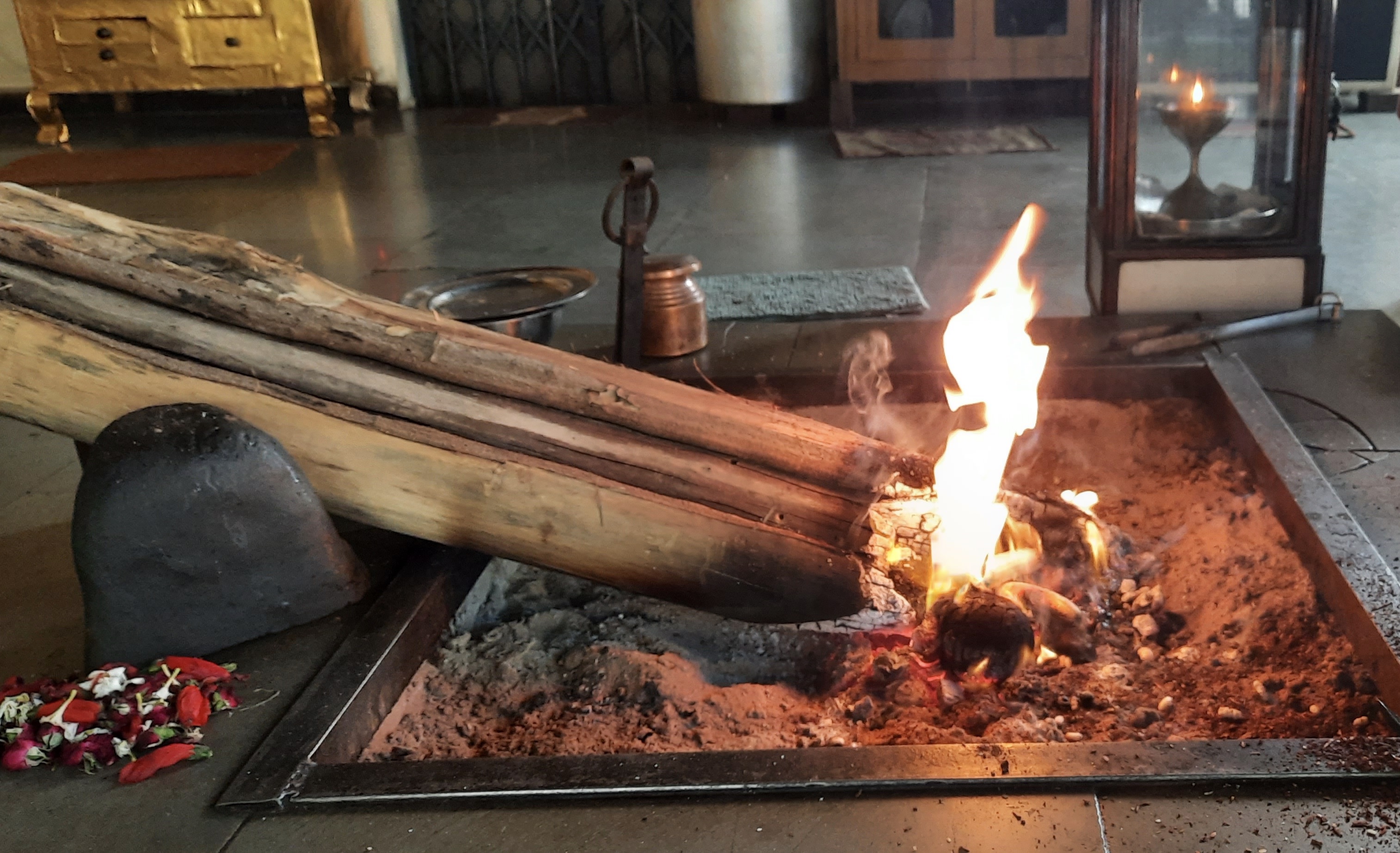

Dhuni at the Baba Siri Chand Gurudwara, Sector 39 Chandigarh


The Adi Granth in the sanctum sanctorum of the 39 Gurudwara

In most gurudwaras of Baba Siri Chand, called Akharas as in the Nath language one will find the Guru Granth Sahib enshrined within the sanctum sanctorum and the Dhuni fire with the chimta (fire tong) of the Nath yogis on the outside. Udasis are known for lighting Dhuna or fire that burns continuously, a tradition followed since ancient times by the Gorakhpanthis of the Nath order. 

For me, this combination of the Adi Granth and the Dhuni is a lesson on how while being a householder one can also be detached like ascetic yogis. The true confluence of both and a river I seem to be floating down from past lives. 

Baba Siri Chand and the Sikh Gurus 

Baba Siri Chand was extremely revered by the subsequent successors of his father. Few incidents stand out. I recount them here as recited to me by devotees.
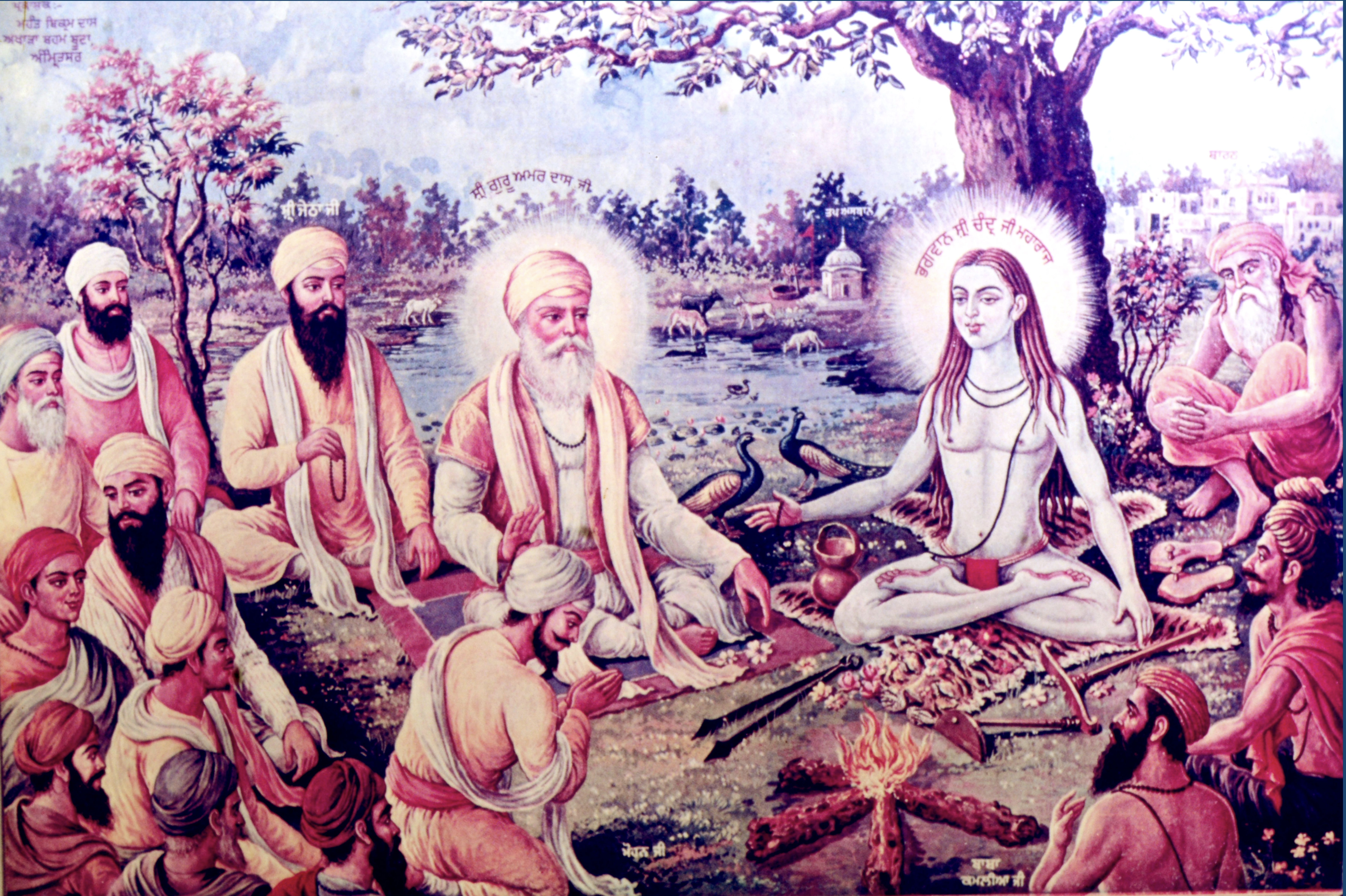

Guru Amardas with Baba Siri Chand

When Guru Amardas (third Guru 1479-1574) met him he recited the Anand Sahib joyously. He offered Baba Siri Chand his son Mohanji. Baba Siri Chand in turn entrusted Mohanji with the handwritten pothi – notes of Guru Nanak Devji which were later compiled by Guru Arjan Dev into the Adi Granth.
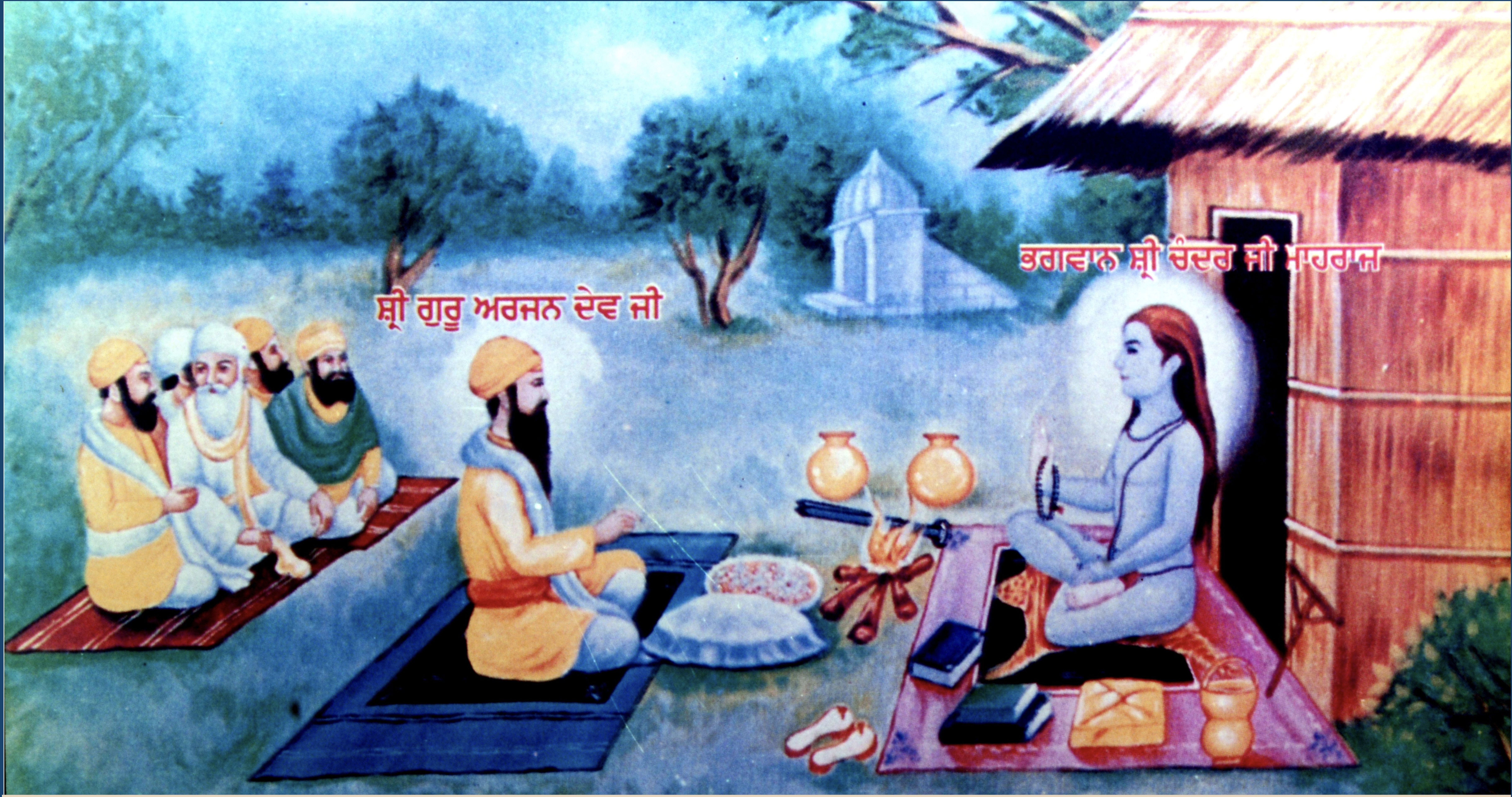

Guru Arjan Dev with Baba Siri Chand in Taran Taaran

When Guru Arjun Dev (fifth Guru 1563-1606) went to meet Baba Siri Chand at Barth Sahib, he had to wait many days as Siri Chand was deep in meditation. At that meeting, after naming the Taran Taaran sarovar, Baba Siri Chand poured water from his holy pot and blessed the lake to never dry up and imbued it with healing properties. 

To this day devotees come to take snaan in this sarovar to heal themselves and to be blessed. Later when Baba Siri Chand visited Amritsar, Guru Arjun Devji was composing the Sukhmani Sahib and had got stuck at sixteen verses. Then Baba Siri Chand gave him a new impetus to complete by reciting the shlok- Aad sach, jugaad sach, hai bhi sach, nanak hosee bhi sach, meaning True in the beginning, true throughout the ages, true in the Now, Nanak forever True. 

One of Baba Siri Chand’s feats I heard about talks of how when Guru Arjan Dev was made to sit on a hot tawa and when hot sand was being poured over him, Sitting far away in his dera, Baba Siri Chand had his disciples pour water on a sapling, the water steamed and boiled as it was poured and devotees believe that gave relief to Guru Arjan’s suffering.


Guru Hargobind Ji offers his son Guruditta to Baba Siri Chand

Guru Hargobind Ji (sixth Guru 1595-1644) went to take blessings from Baba Siri Chand and he too gave his son, since then to be known as Guruditta, given by the Guru or to the Guru is an interpretation open to the follower. 

Guru Hargobind was instrumental in carrying forward the instructions of his father to start preparing an army of steady soldiers for the coming onslaught. This is the period of my connection with both Baba Siri Chand as spiritual Guru and Guru Hargobind as militant Guru. His instructions of Miri and Piri, temporal and spiritual swords, have been carried forward, resonating very deeply with my practice in this life too.


Maharana Pratap offering respect to Baba Siri Chand.

Besides the Guru’s other great emperors also came to meet Baba Siri Chand. One such person was Maharana Pratap, who came to seek his blessings in Udaipur when Babaji was visiting the city. It is said that Emperor Jahangir sent his personal elephant with his soldiers to escort Baba Siri Chand to his court but the elephant could not even lift his blanket. This way Babaji sent the emperor a lesson on ego.

Teachings through Miracles

For me miracles is a science, acting faster than the human brain can comprehend so they seem unexplainable to the ordinary mind. To bend and override laws of nature to their will seems to be an act of child’s play and our Gurus’s lives are full of such acts which they apparently accomplished with no effort. Importantly, most of these miracles are to teach lessons in humility, compassion and courage to those witnessing them.
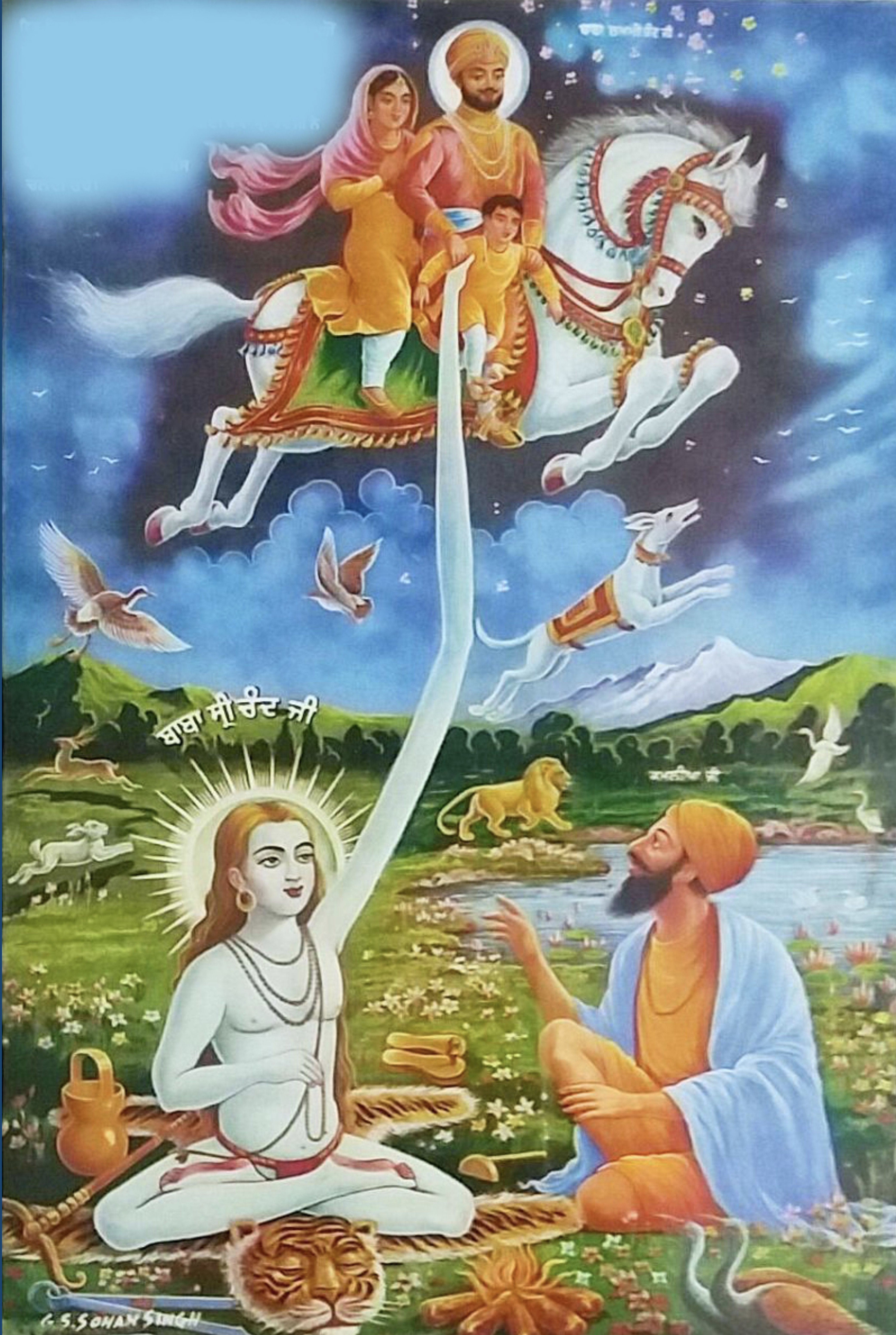

Baba Siri Chand reaches out reaches out to pluck Dharam Chand and bring him back to earth.

In a very dramatic story, Baba Siri Chand is depicted reaching out with a long arm reclaiming his nephew Dharam Chand from his brother Lakshmi Chand as he and his wife leave for their heavenly abode apparently as penance for killing animals during shikar. He does this out of compassion to save the lineage of his father Guru Nanak. 

Later he is shown feeding the hungry baby milk from his big toe, thus completing the role of father and mother. Which for me was a lesson in showing the presence of both male and female energy in this great evolved being. He went on to teach how the discriminations in gender is created by humans and has no relevance in the realm of the divine. 

When once Yakub Khan, Governor of Kashmir went to meet him full of anger, ready to trample the area underfoot Baba Siri Chand calmly picked up a burning log of fire from the dhuni and planted it firmly on the ground, and lo behold it sprouted leaves and came alive again. 

Once again by a simple act Siri Chand taught a lesson to Yakub Khan on how anger harms and burns one to ashes and how by overcoming it new life can be born and immediately calmed him. 

There are many other incidents of Baba Siri Chand – bringing forth fresh water by the seaside, bringing dead animals and people alive, bestowing longevity, stilling the storm to guide ships of a merchant devotee and such are the legends of great beings in India. 

It is believed that the great Siddhas came to hear his discourses and see the miracles he did with so much ease. The beauty of these oral traditions are that we get the flavour of the land and the people. For me that is an invaluable ingredient in savouring them.


Baba Siri Chand crossing river Ravi on a boulder.

Finally on a day in 1643, nearing his 150th birthday, Baba Siri Chand is believed to have mounted a boulder and crossed over to the other side of river Ravi. He disappeared from mortal eyes after having promised his disciples that wherever a dhuni is lit, there he will be present. And so to this day the dhuni is lit and kept alive in the Gurudwara Akharas dedicated to him across this country, and his presence felt by the sadhaks sitting around this sacred fire.


3 Comments

āyukahat- life says

Progressing along in my yog sadhana, my mind started to awaken to truths that though they may have been around, were special to me as they unfolded to me, personally. Short one liners would appear in the minds lake along with their realisation. The whole process is like the blooming of a thought bud into a full flower realisation. A process that I enjoy thoroughly as it still continues.

Finding it pompous to post them as “jyoti” kahats – jyoti says or quotes by me 🙄 – I found an ingenious way to deflect them to my studio nomenclature, a nom de plume if you may. They have been posted on social media as they emerge but here I bring them together in a bouquet for those who may want to feel the fragrance, as I do when i reflect upon them. They are to be enjoyed at leisure and I keep coming back to them as new understandings unfold and may add more or refresh the existing from time to time. The reader may find their own understandings from them as they are pretty self-explanatory too.

I begin not in sequence but with my signature theme of Kurma- the turtle. Since childhood I had a passion for collecting suns and turtle figurines and they both figure in my studio logo, mostly online! The symbolism for both are many and I am not going into that here.
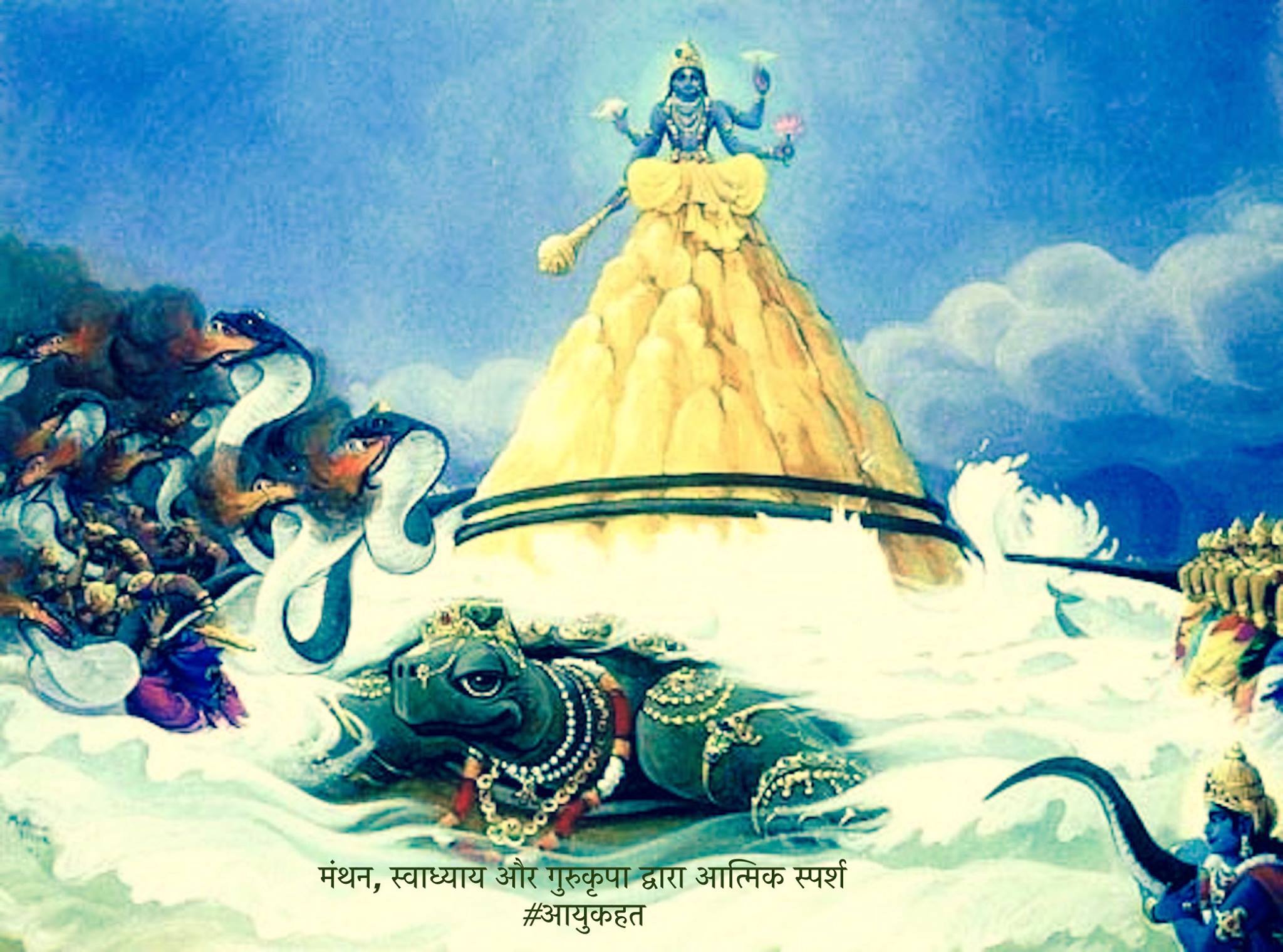


Copyright for the images used in the following notes is dedicated to the world wide web from where I sourced them unabashedly taking care, as much as I could, that there were no issues but I guessed if they are not marked in some way, it was okay, if not we will find out I’m sure. The content is all mine and as always readers are cautioned to use their own discretions to agree or not.

मंथन स्वाध्याय और गुरूकृपा द्वारा आत्मिक स्पर्श

undefined

With inner churning, introspection and grace of the guru, the light touch of the divine is experienced on the soul.
As we step on to and progress on our chosen spiritual path a time comes when emotions and the mind are churned by positive and negative passions; at that moment by self study and grace of the Guru, one gets a glimpse of the Inner Knowingness. During the churning as the inner toxins emerge the steady disciple by self study and the grace of the guru flips the negatives into positives and reclaims the innocence of sahaj and feels the touch of divine love.
The sadhak may then exclaim in wonder, as I did with an outpouring of love for the guru. “You are not this body of flesh and bones that sleeps decays and dies, you are immortal Consciousness!!” तुम देह नहीं नश्वर नासी, तुम अल्लख निरंजन अविनासी”, says Yogiraj Siddhanath, “I am spirit, I am truth, I am love divine, this body mind, a dream of mine.” The yogi practitioner through the churning sees the bridge that connects the human to the divine.

Provoke Thought

undefined

Positive agitation births, makes conducive the environment to birth pearls of wisdom. galaxies of infinite realisations. “A consolidated mind is a beautiful mind,” says my guru Yogiraj Siddhanath, a name you will hear repeated many times in all my writings. In spiritual practice a positive stimulation, initiated by the vivek buddhi, leads to rediscovering many truths for the sadhak. Often the popular belief is that meditation profferes a thoughtless state of calm. From personal experience I can say that the mind in a calm manner studies its experiences and as clarity improves nuggets of realisations rise to the fore to be further savoured. It is the very stillness of the mind that allows this steadfast speculation.
True Gurus encourage this quality in their disciples, two of my favorites from the past are Adi Shankaracharya and Kabir who had mastered this to an art. Yogiraj Siddhanath, my satguru often agitates the disciple in order that they don’t fall into a stupor of mindless devotion. “Feel with the mind,” he says, “and think with the heart.”

Clarity begins at Home

undefined

Home here of course refers to the self enmeshed in the body of flesh, emotions, mind and intellect. Clarity comes with an intense practice and the self awareness arising from it. Swadhyaya a sub tenet of yog sadhana helps immensely in this. Unless we can see clearly our own motives and agendas without bias through the layers of our mind and emotion, through our intellectually collected information, seeing the external circumstantial occurrences with clarity is near impossible, I have realised. This was the first one in the series and therefore please do excuse the similarity to the very common christian adage about charity!

A Little light can Overcome a Lot of Dark

undefined


While watching My Little Pony with my children way back in the 1980’s there was an episode in which the ‘evil’ person, a centaur, half horse half man, had a huge bag pulsating with evil energy which he let loose on the hapless ponies. Let me stop for a moment and say I have never been an advocate of symbolising all good things as white and all evil as black realising how it reflects on a society discriminating based on colour. So here the dark is an opposite of light as in a flame of a candle in a dark room. In fact in spiritual experiences whenever I have experienced light, it has been colourless brilliance. To continue, every time the evil centaur opened the bag of darkness he cried in a thunderous voice, “Behold the power of Darkness”, and the power accompanied with some loud drumbeats would overcome everything, the trees, the river, the lands. Then the ponies managed to get a power of their own. So next time whilst the power of darkness was doing its dance of doom, the little pony opened her small bag and out popped a little rainbow, very minuscule in size, in a small faint voice the pony said, “and behold the power of light.” My girls would gasp at this and feel oh what could this little spark do against the mighty darkness, but lo behold if the rainbow didn’t quickly within a flash drive the centaur, his bag of destruction and the darkness away. I also felt the lesson learnt by my girls then has stood the test of time for them. So this visual was exactly apt for the realisation.
The rainbow of light is encapsulated within our body in the form of our Chakras. The moment we unleash this through yogic practice the dark dis ease of the body (physical, emotional, mental, intellectual) is enlightened. Alternately, a small flame can drive away the pitch darkness in a room. The only act required is to light that spark.
*a note to clarify that in this instance light is used to denote awareness and dark for ignorance, that peace and love can have no colour and or can be all colours. (this was in the original post and I am leaving it here).


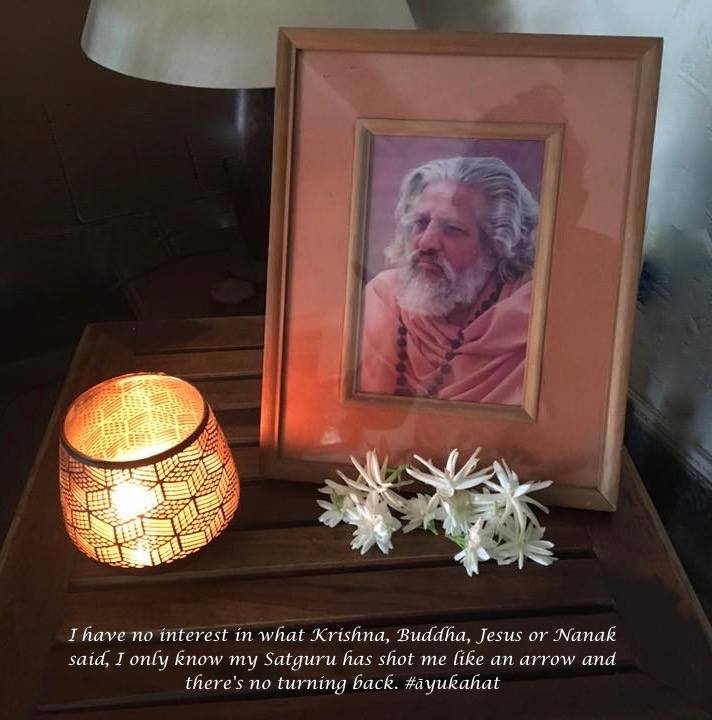
I Have No Interest in what Krishna, Buddha, Jesus or Nanak Said, I only know my Satguru has shot me like an arrow and there’s no turning back.

undefined

(Sat) Gurus and Divine Guides come from time to time to give direction to an evolving humanity. They come with messages current to that time and age fashioned to awaken and enlighten the contemporary seeker.

Discerning disciples connect with these enlightened beings in every lifetime. Rather than the tradition or schools from the past, these souls find the Spirit in a living Satguru and flow the fast track current. One pointed concentration with vivek and sat buddhi they are magnetically drawn towards the source that is here and now. Some sleeping ones are awakened by the Enlightened One with a swift kick. Thus these realisations become real and immediate for the disciple connected with the living master from life to life.

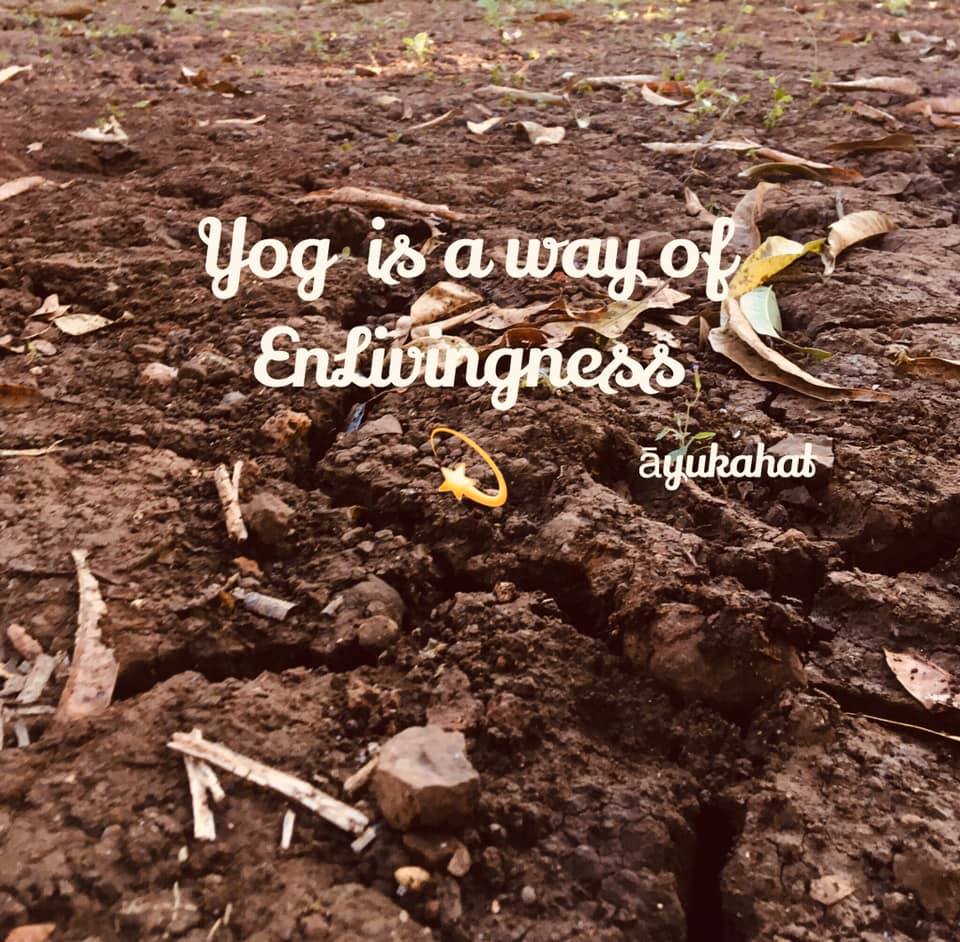
Yog is a Way of Enlivingness

undefined

Yog popularly addressed as yoga is a way of enlightened, enlivened living. It facilitates being present in the moment, the here and now, allowing at the same instance to view the past, present and future.
Daily life becomes a celebration, joyous and liberated. Dissolved completely, flowering into love one cannot but radiate that perfume. Undisturbed and unfettered by the turmoil without. The photograph is the soil of our forest ashram in Pune, where I was introduced to true yog and enlivened living by a Satguru.

kriyayog;antidote

undefined

Kriya Yoga is an antidote to the vagrancies of a truant mind, by practice of this a force surfaces that overrides archaic patterns of thoughts. The result is an unadulterated vision and immersion.
There is a whole blog I have written on this topic you can find it here.

Perceive the Possibility of Infinity

undefined

That moment in yogic practice when awareness opens up to the possibility of infinity. The individual on the threshold of the experience, the distilled mind already knowing of its reality… an exquisite vast moment in time indeed. On the threshold of knowing the merging but not yet merged…
An awesome awareness of the individual knowing the consciousness can extend beyond the borders of their physical body, extend beyond even the earth and the solar system, into this universe and many universe.

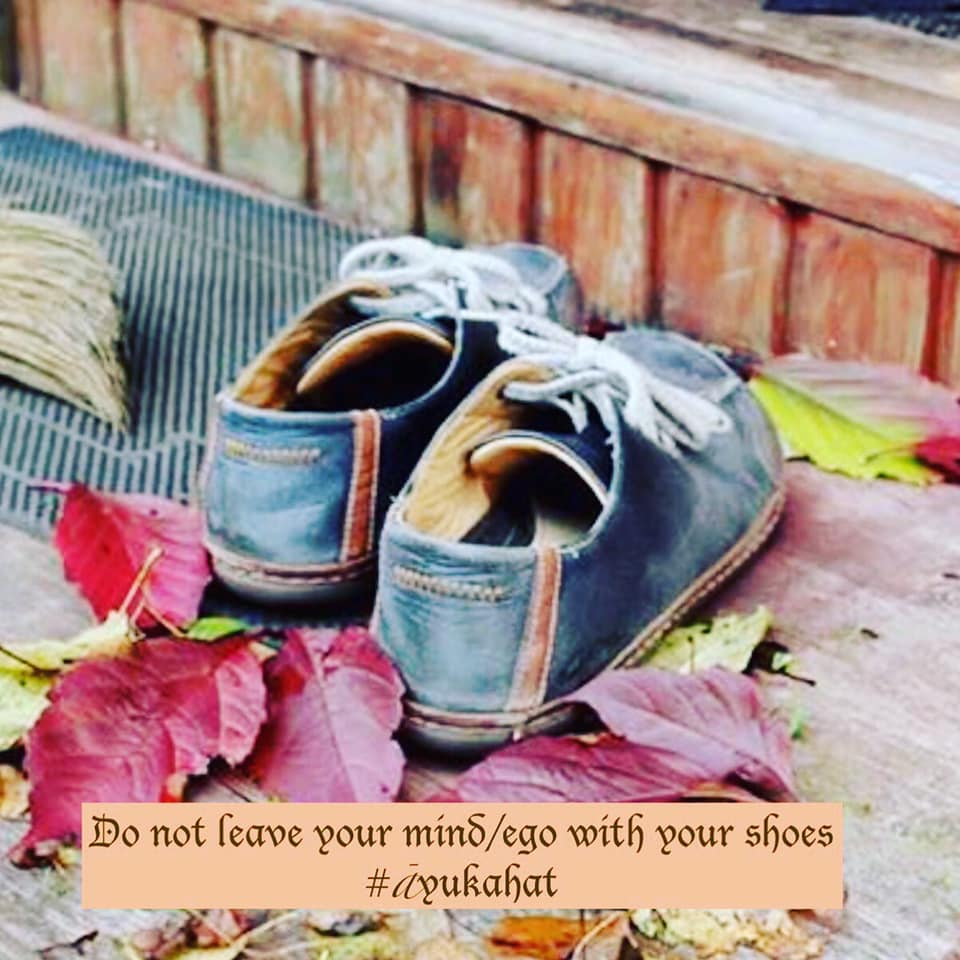
Do Not Leave Your Mind/Ego with Your Shoes


The mind, the ego is your sense of self which is transformed to the realisation of your Self. The calming of the fluctuations and turbulence of the mind is the basis of yog sadhana. if you have already achieved it you need not enter at all, if you haven’t, leaving it behind you become part of a herd.
I have once again written a detailed blog on this, you can read it here.

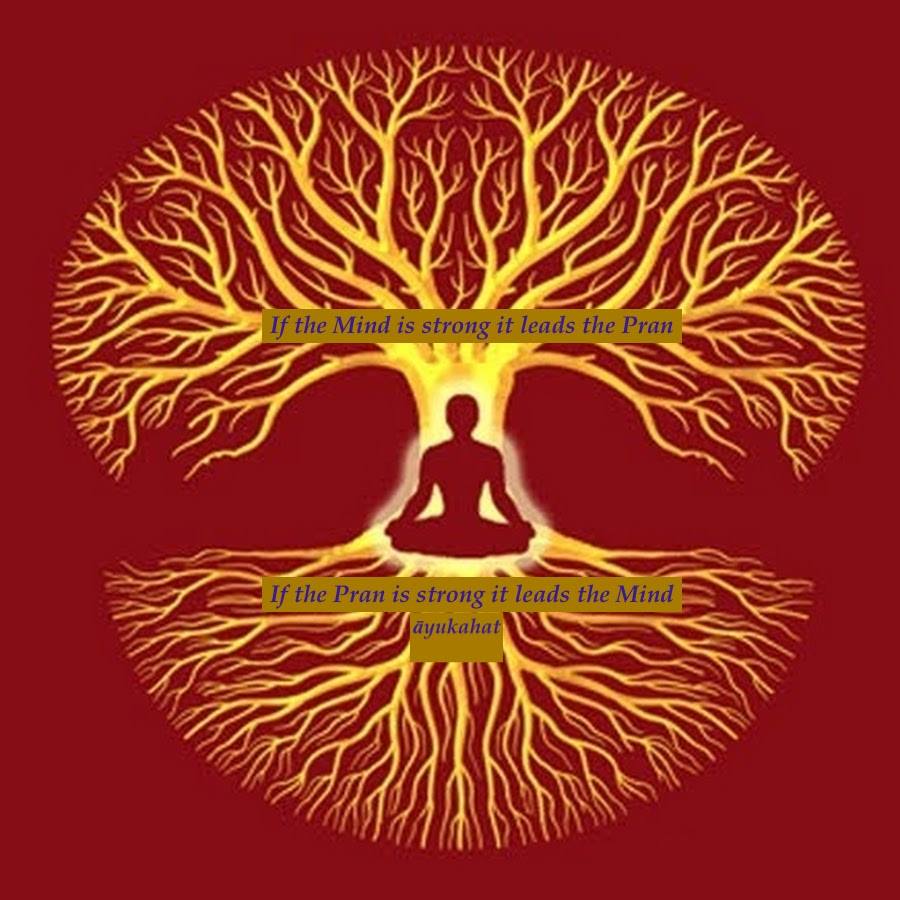
If the Mind is Strong it Leads the Pran, If the Pran is Strong it Leads the Mind

undefined

Yogiraj Siddhanath, my Satguru instructed as training for practice, “जहाँ चित्त वहां प्राण” meaning where the mind goes there the pran follows. Following his instructions I realised through practice that depending on whether the pran was stronger or the mind, the stronger leads.
I realised that the Pran has an intelligence that by nature leads inwards. the mind by nature leads outwards. The Pran by nature is non-violent, by training the pran through pranayam, the mind is easily led towards Dharana- concentration. Realisations are still coming in about this in practice daily. Updates will follow. The play of the pran and mind, those who taste know. You may like to read more about how to practice dharana here.

In The Ocean be the Drop; In the Drop be the Ocean


In the ultimate stage of yog sadhana, self and god realisation is accomplished when the individual consciousness merges into the universal consciousness; often referred to as the merging of the drop into the ocean; whether the drop absorbs the ocean into itself or the ocean effacing the final layer of separation absorbs the drop into itself, is the in the purview of personal experience. In this concept success is in the effacement of the ego drop and a becoming of the larger vaster consciousness.
For the yogi in action though- the karma yogi- active in the ocean of samsara the feat could be different. Here in fact the same yogi needs an awareness to not dissolve in the ocean or get carried away by the tsunami of action losing identity of individual awareness and becoming one of the crowd.
Maintaining vivek buddhi, the yogi is to navigate the ocean of samsara, the cyclic wheel of birth and rebirth. The karma yogi through informed intuitive action clears the karmic ledger accrued by past actions without creating new karma.
This thought came as I watched the streets swelling with protesters of BLM, having myself protested in agitations for farmer rights in India, I have a personal understanding of how the effect can take over the cause and how narratives can pull the actor into the role until losing sight of that steady inner spark of the spirit one starts to falter towards the ever changing outer glitter.
Adherence to yam and niyam, the first two tenets of yog affirms the yogi to interact with social injustices and discrepancies. In fact it is an inherent part of yog sadhana. To do that while maintaining an awareness on the inner climate of radiating love to all, even the ones perceived to be on the “other” and “opposite” side is the challenge that many can fail.


Learning from the texts of Dead Gurus is like warming your hands on a fire; learning from a Living Guru is like sitting on the Fire.

This early morning thought was a culmination of years of practice with a living Satguru, of numerous initiations by my satguru into evermore subtle, powerful and distilled practices to expand individual consciousness, a result also of many such lifetimes learning directly in the presence of living gurus and finding the path to the living guru in every lifetime.

It is a practice that i have been doing of sitting on a funeral pyre to burn my impurities which I later found was a technique give in the Vignyana Bhairav Tantra, the living satguru having unlocked this from the latent memory bank during an initiation at the ashram. The living satguru make seamless our lives one from the other so it’s like we wake up from one life into another and carry on from where we left off. Often Gurus and disciples move from lifetime to lifetime or disciples are guided to other living masters by the previous ‘dead’ ones. That has been my experience and realisation.

It is a great comfort to many to read scriptures, join organisations and take for themselves masters who have passed and left behind a legacy. The safety net of the qualities attributed to these gurus are not volatile and cannot change from pupil to pupil and that becomes a relief to many as they can manoeuvre placidly in these waters. While a living satguru tests the disciples constantly, keeping them in a high state of alertness so they don’t fall into familiar intellectual pitfalls.

Though many masters are able to communicate from beyond the veil, I personally feel a living Satguru can and is able to take direct action in the pupils evolution towards the spirit. While texts have to be interpreted and hidden nuances nurture an intellectual pursuit instead of a direct experience, however enjoyable that may be. The process can be very slow and take a long time to bring extraordinary effect.

A living satguru, however in an instant can burn the veil of acquired mindsets, flights of fancy and disproportionate ego of understanding, leaving the student disciple with a clarity beyond clear understanding.

Living Master Dead Letter, a conversation with my Satguru Yogiraj Siddhanath


Sanyas, a state not a stage


The varna ashram dharma qualifies sanyas as the fourth stage of life after brahmachrya, grihastha and vanaprastha. Yet sanyas is a state of being, to live steeped in divine consciousness. This state can be achieved and maintained in every stage of life, whether adolescence, householder or retiree. Living is a state of sa nyasa, understanding the body as divine, living in total inner and outer purity does not require an age to achieve, only an inner consciousness often carried over from past life.Mind you here purity is not another word for morality but an innocence of all vice and virtue.

वर्ण आश्रम धर्म ब्रह्मचर्य, गृहस्थ और वानप्रस्थ के बाद संन्यास को जीवन के चौथे चरण के रूप में योग्य बनाता है। फिर भी संन्यास ईश्वरीय चेतना में डूबे रहने की एक अवस्था है। इस अवस्था को जीवन के प्रत्येक चरण में प्राप्त किया जा सकता है और बनाए रखा जा सकता है, चाहे वह किशोरावस्था हो, गृहस्थ हो या सेवानिवृत्त। जीना संन्यास की स्थिति है, शरीर को दिव्य समझना, कुल आंतरिक और बाहरी पवित्रता में रहने के लिए उम्र की आवश्यकता नहीं होती है, केवल एक आंतरिक चेतना अक्सर पिछले जीवन से ली जाती है। ध्यान रखें कि शुद्धता नैतिकता के लिए दूसरा शब्द नहीं है लेकिन सभी दोषों और गुणों की एक मासूमियत II


That’s all in this segment. I will be revisiting and updating as new realisations come. You are welcome to share and subscribe if you want to read more. You will receive no unwanted mail or newsletters or nudges from moi. Too occupied in my own pathways for any of that. Cheers. Namaste.


11 Comments

Kashi- Flowing us back to our source.

It’s amazing isn’t it when a certain truth is revealed to you at an unguarded moment and your awareness has an Aha moment and the brain lights up with a brilliance. Such revealed knowledge occurs as a result of the grace of our Satguru and our personal sadhana and has the potential to transform us but might have little significance for someone else. This happened to me on a recent visit to Kashi.

Yes took off for a long time, but thats the beauty of a blog, no deadlines and no compulsions ha ha. Anyways here I am back from Kashi with what I’m hoping is another small step towards divinity….or not huh.

It was a peaceful time to visit this city.

Being the monsoon season the Ganga flowed majestically full, pregnant with water; her movement evoked in me a nostalgia of many lifetimes spent in her arms on the ghats of Kashi. A familiarity with her ebb and flow which could not have come from this life. The city streets felt the same, intimate knowledge akin to the free pariah dog who has marked territory and knows every secret of the winding gallis. On each visit to Varanasi as this city is now known, I have experienced this homecoming. The last visit was with my beloved Satguru Yogiraj Siddhanath and his wife Gurumata Shivangini.

The Urdhavaret Ganga.

IMG_0172

On the second day of my visit as I sat in a state of heightened happiness in my room overlooking the Ganga, I felt as if I too was in flow as she flowed towards the north, North? and the realisation fell like a lightning bolt that, this is the message of the Ganga from aeons of time- Go back to your source. She who is perceived to have emanated from Shiva’s locks in the Himalayas was here flowing back to her source! This has been her hidden message to the millions who took a dip in her year after year for thousands of years. Practice as I did Mahavatar Babaji’s urdhavaret breath of the Kundalini Kriya Yoga as taught by my Satguru Yogiraj Siddhanath, this realisation spurred on a movement of uncontrollable delight in my spine. At the same moment emanated within me, a sense of awe at this special revelation.

In her journey from the Himalayas in the north towards the Bay of Bengal to the south and east, the Ganga in Kashi turns back and flows North. Of course there must be a geophysical ‘reason’ for this but that is not of the essence here. What happened was a sudden inflow of divine insight for me. I had not read or heard about this phenomenon in any scriptures or ancient text, I don’t remember anyone ever mentioning the river in this spiritual context.  Yes, it was as if Ma Ganga revealed to me a secret which was forever visible through the ages but not realised. I wonder if I am the first person to chronicle this understanding of the urdhavaret message of this ancient river.

After this realisation the daily morning dip took on a new meaning. “Do not depend on externals for your happiness,” says Yogiraj urging his disciples to tap into their inner well of joy independent of material possessions or external supports. The Ganga was reiterating this as she flowed accepting the garbage and the flowers of love, the ashes and the sweet offerings, the greedy and the sincere devotees.

Sitting in the river I could feel all my energy reversing, a fountain of love, aided by the flow of the loving Ganga. We are truly liberated when we are able to unhook ourselves from the externals, she was indicating to me. A profound sense of peace and contentment filled me and continues to fulfil me.

Visit to my Satguru and his Param Guru Sthan

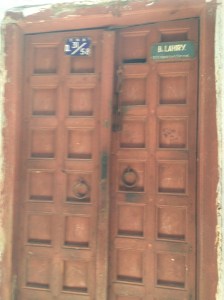
There was a special reason for my trip at this time, a visit to Lahiri Mahasaya’s home which was open to public only on GuruPurnima day. On my earlier visits I have visited this house, almost difficult to find, and sat and stared at the door of an all too familiar house. The first time was on September 26th, 2011, at the time of the spontaneous visit I was unaware that it was Lahiri Mahasaya’s samadhi date in 1895. I had from many years ago had visions of Lahiri Baba and remembered a past spent with him in his presence, a close connection where I handed him his umbrella and his shoes when he ventured out, glass of water when he returned from work and how he blessed me as a young girl in my Bangla marriage attire.

   IMG_0094 Circumstances had made it impossible to realise this heartfelt desire earlier but this year being free from many responsibilities I undertook this pilgrimage.
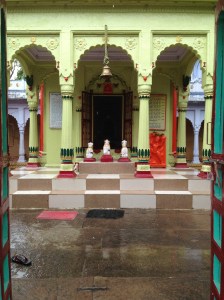
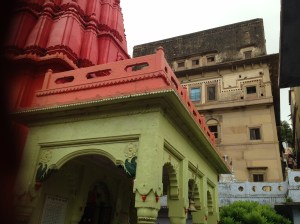
On Gurupurnima day, early in the morning accompanied by two others I set off on a journey which for me was a completion of a karma from the past.

But first we visited the Nandi Ghat or Gaai Ghat, hallowed as it was by its association to our Satguru Yogiraj Siddhanath who spent his childhood days in this ghat owned by his family. Disciples rooted in the Guru/Shishya tradition always pay first respect to their living guru. There is a well known couplet by Kabir who says, ” गुरु गोबिन्द दोउ खडे काके लागूँ पाँय, बलिहारी गुरु आपने गोबिन्द दियो बताय,” meaning-” when the Guru and Gobind are both present whose feet should I touch first? beloved is the Guru who has shown me the way to God.” The Guru who has enlivened the spark within to even comprehend Gobind (a name for Krishna) will always take precedence in the heart of a true disciple. But for me my Guru is Gobind and I look no further. 😀

Nandi Ghat/Gaai Ghat and Yogiraj’s family Temple.

Nandi Ghat/ Gaai Ghat, Yogiraj SiddhanathIMG_0118IMG_0110IMG_0111

After a special aarati and sadhana at this very personal shiva temple we headed towards Lahiri Mahasaya’s home near Purana Durgaji in Chowsatti Ghat. Since the boats were banned due to the fast flowing river we made our way through the narrow familiar streets of the old city. No photographs were allowed inside so I managed to take some from the narrow street outside.

Lahiri Mahasaya’s Home as seen from the street.

Lahiri Mahasaya home, Kashi IMG_0093
Soon as I entered the house I was pleasantly surprised at the layout, which was exactly as I remembered it, the stairs coming down, the open space in the centre, this confirmation of my remembrance was very comforting as I realised it was not just an imagination of the closeness. As I bowed in front of the seat of Lahiri Baba I had a meltdown moment as past life associations came flooding out. At the same time there was a sense of a completion and I knew I did not have to come back here again. Interestingly, when my forehead touched the asan of Lahiri Baba it stuck there for an instant and I realised that some wet red paint had adhered to my forehead from my gurus temple which had been freshly painted and this now had been transferred to the seat of Lahiri Mahasaya, a smudge of red on the blanket! In small signs great connections are revealed! We received the prasad from the family members and left.

Street Food, Bovine Majestica etc.

Daily breakfast was at the corner kachori shop which would open at 8:30 and shut at 10 am. The father and son duo seemingly happy with what they make in that time. The whole day was peppered with stops at The Blue Lassi shop with wifi for a mango lassi, the Kashi Chat Bhandar on Dasashwamedha Ghat for an amazing tamatar (tomato) chat or tikki and kulfi!! Of course our progress was often marred by majestic cows and bulls on the street who had to be cajoled out of the way. 😀

Street food and cows IMG_0100 IMG_0102 IMG_0125IMG_0164IMG_0165IMG_0162 IMG_0163

On the last evening we made it for the Ganga Aarati at Dasashwamedha Ghat.

IMG_0147Ganga AArati

It is right that I end this with the Manikarnika Ghat or the burning ghat. From the balcony of my room I could see the constant burning pyres, a testimony to the fleeting moment of human life. This too evoked a nostalgia and yearning for I know not what.

IMG_0129